Sunday, December 4, 2005

Pentax Dolland And Aitheson

visit of the Romanian students in Bulgaria, Sept. 2005:


trip to Romania

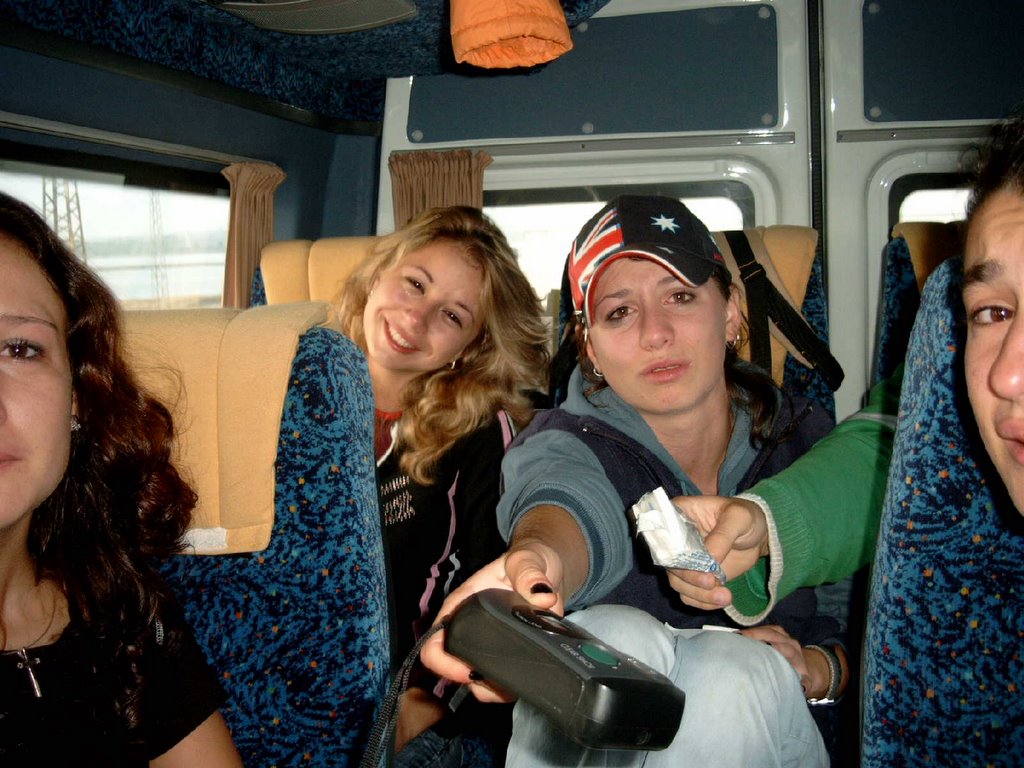
Before we climbed Romanians in n de bus, we passed by the Bulgarians. Many tears were shed and many wonderful memories are still with us.
We will never forget always remember the wonderful time in Bourgas and the unpleasant.

When we were on the bus, we began to talk about different things, crying then laughing, then crying again, and so it was a while before we get tired at a time have become and are finally asleep.
On the way we hear music, very much sleep and also about the experiences, our "gesprochen.Wir Bulgarians have also looked at photos from Bulgaria and wept again.
The return trip was nice, but I think even sadder than the outward journey. The parting was very difficult for us in Bulgaria.
We arrived safely at home and that student exchange is not forgotten.

Kanyicska Ioana (RO)


Burn Blister On Thumb

farewell visit to the Romanian students in Bulgaria Sept. 2005: Thursday Group 2: Traffic light game


Thursday, 09/29/2005
(Report Group 2: Traffic light game)

After our group work as of Tuesday presented, we were divided into 2 groups. The first group turned in Rotationsprinzig each other of their countries and was in the library.

The second group in which I was playing, the so-called traffic light game.
We were divided into 3 groups and each group had a color of traffic lights (red, yellow, green)! Each color was assigned to some countries. The countries that are members of the European Union were among the green color, the countries that are candidates for accession were among the yellow color and those countries whose membership is being discussed, were red in color. We discussed these countries and then each group was given a task for this topic. My group, for example led a discussion on minorities.


Then we invited our Romanian guests at a dinner in the canteen. Each student exchange participating Bulgarian students had brought from home for a typical Bulgarian dish. We have all eaten their fill. In the night we went
in the disco and we had a lot of fun!

Mikhail Zapryanov, Class 10e (BG) / Carmina Dumitrescu (RO)


Wedding Seating Chart Golf

visit of the Romanian students in Bulgaria, Sept. 2005: Wednesday, Pomorie, salt


had
Wednesday morning, I

Wednesday morning we get up earlier. Why? Because we visited the salt pans in Pomorie. The Romanian students traveled with their Romanian coach, but the Bulgarians had at the station waiting for the bus. The Romanians were of course faster, so they had to wait for us in Pomorie. So they do not get bored, they have made a lot of photos to remember this wonderful place.

But then came the other, and we were told about the salt flats. It was interesting to hear things, that the red sea water from the basin for microorganisms, that the salt extraction is hard work is being carried out by father to son, that this is the only museum in Bulgaria and the Balkan Peninsula, which uses the evaporation of sea water by the sun for the production of salt, or that since 5.Jh.v.Ch. these salt pans exist.

They said that two processes must take place: evaporation and Kristiallisierung get to the salt from sea water. We watched a movie and then shows us an old man how to make salt. This man was then in the museum in photos and video film to see!
For the Romanians, but also for the Bulgarians, it was an interesting and exciting trip. On the way back to Burgas, the Bulgarian to the bus stop in Pomorie with the Romanian coach, where they then drove back to the bus. The Romanians were back quickly with their bus in Burgas and looked forward to a break, after which it has held group work at school in the afternoon.


Wednesday morning II

my cell phone rang. It was 6 clock. Should I get up? Stupid question, of course, George and I should get up, otherwise we delayed our meeting for the group. After the program we should really be divided into two groups, the first visit to the salt mines and Burgas, the second museum to the salt. But then it turned out differently. On what grounds However we could not visit the salt flats Bourgas and we all went to Pomorie.Und was this: we were divided into 2 groups, the Romanian and the Bulgarian group. The Romanians and Mrs. Todorova went by bus to which the Romanians had arrived, and the Bulgarians should wait at the bus stop to another bus. After 20 minutes later a minibus and we were soon at the Salt Museum. Outside the museum, the Romanians had arrived before 30 minutes.

But as we, the Bulgarians, got out, shook us a terrible noise. Somehow, the museum was the alarm was triggered. When peace again reigned, began an old salt master us to explain the processes by which salt wins. He spoke in Bulgarian and Mrs. Hristova interpreted, so that our Romanian guests could understand everything. But for us, the Bulgarians, the lecture was boring and that is why some talking. Ms Todorova was angry, and warned some of us very seriously. Suddenly all the students were silent. But some Romanians were afraid n, only some of the Bulgarians laughed softly, and some of them turned red and began to cry with laughter.

After the lecture went into all the students to the museum for a glimpse of a movie. Some were sleeping, because they were too tired, some were bored or could not understand everything because it was in English.
then showed us how to master the salt wins. The Romanians took pictures. Then we brought the Romanian bus to the station in Pomorie, where we waited for the bus. But the Romanians were faster in Burgas and had a break, after which the group began work.

Diana Janulova 10b (BG) / Georgiana Beu (RO)


tasks and group division last week

first Group: Development
6 students a presentation on the morning
6 students prepare a presentation on salt in Romania
4 students develop a Wissensquizz on the theme of "salt"

second Group: in the chemistry laboratory
5 students ex. 1: salt
5 students ex. 2: drinking water from sea water
5 students ex. 3: Salt evidence
Where Does Lays Get Their Salt From

visit of the Romanian students in Bulgaria, Sept. 2005: Tuesday, Group II results historical tour


historical tour

had the occasion of the visit of our Romanian guests are present before them the sights of Bourgas. That is why we made this city tour whose purpose was to acquaint them with the following objects. Pictures of them are on display in the gallery of our website.


The Archaeological Museum

This museum is located on one of the main road from Burgas - Aleko Bogoridi. He was born in Kotel and was also General Governieur of Ostromelien. He is not directly connected with our city, but with the finest street in his name. When we were in the museum, we were told that the earliest excavations in front of 40 000 years ago Christ and he ste settlement was located on the territory of today's harbor.


ethnographic museum

ieses D House of ethnographic museum was Dimitar Brakalov. It was built for his family. Since 1981, the house is a museum. Dimitar Brakalov was three times Mayor of Burgas. In Burgas there are 4 ethnographic groups - Zagorzi, Rupzi, Ronki and Erketscheni.


Cyril and Methodius Church

The Orthodox Church of Cyril and Methodius Church on the Cyril and Methodius place on 15 August 1895 inaugurated.


The City Council

The first mayor of Burgas Niko Popov was born on October 12, 1836th The symbols of Bourgas are lion, fish and boat.

The Historical Museum

through a lot of photos shows the rebirth of Burgas to the liberation and its confirmation as an industrial and commercial center, very clear. The architect of the historic museum is Rikardo Tuscan. The building exists since 1920.


Armenian Church

The Armenian Church was built in 1906-1907 and in 1935 painted. It is a sign of the fixed relations between Bulgaria and Armenia. Such churches in Sofia, Varna and other cities that have held in the past, the largest Armenian communities.

The synagogue

in 1853, built by Tuscan Rikardo synagogue Temple of the Jews. Today it is an art gallery, which exists since 1946. The synagogue is Surpwatsch. There

Hauptbahnhof

on the tower of the station building there is a Clock. The architect of the building en Kiril Maritschkov and Nikola Kostov. It is built on area of 2088 square meters. With the inauguration of the station on May 14, 1890 Burgas with the other cities of Bulgaria has connected.

On this day we have seen many interesting things. Even we had to locals something new. We hope that this walking tour will be enjoyable for our guests!

Stanislav Janchev 10g (BG) / Firtonea Radu (RO)